
"coffee farm environment"
5000 article(s) found

Columbia Del Obispo Bishop Hill Farm introduction to Colombian Coffee Flavor
Professional coffee knowledge exchange more coffee bean information please follow the coffee workshop (Wechat official account cafe_style) Colombia is currently the world's third largest coffee producer, after Brazil and Vietnam, the first to grow commercial beans in the 1830s, to the 20th century coffee accounted for the largest export crops, mountain topography coupled with a variety of tropical microclimate, providing an ideal planting
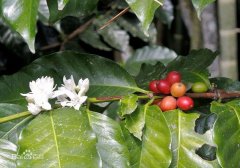
Coffee bean growing environment boutique coffee Hawaii Kona Colombian coffee beans
The suitable climate in Colombia provides a real natural pasture for coffee. Coffee trees in Colombia are mainly cultivated in the Andes, on steep slopes about 1300 meters above sea level, where the annual temperature is about 18 degrees Celsius, annual rainfall is 2000 to 3000 millimeters, latitude 1-11 15 north, longitude 72-78 west, and the specific range of elevation can exceed 2.000 meters. By

Columbia boutique coffee beans manor beans-washed by Bourbon from Bishop Del Obispo Mountain Farm
Professional coffee knowledge exchange more coffee bean information please follow the coffee workshop (Wechat official account cafe_style) Columbia boutique coffee bean manor beans-Bishop Del Obispo Mountain Farm bourbon washing treatment of the flavor and taste? Colombia is currently the third largest coffee producer in the world, after Brazil and Vietnam. It first grew commercial beans in the 1830s and in the 20th century.

Growing environment in the Andes, a coffee-growing region in Colombia
The suitable climate in Colombia provides a real natural pasture for coffee. Coffee trees in Colombia are mainly cultivated in the Andes, on steep slopes about 1300 meters above sea level, where the annual temperature is about 18 degrees Celsius, annual rainfall is 2000 to 3000 millimeters, latitude 1-11 15 north, longitude 72-78 west, and the specific range of elevation can exceed 2.000 meters. By

Colombia Nario Na Linglong small Farmer's selected Farm Coffee beans
Colombia Nario Na Linglong small Farmer selection Farm Coffee beans Colombia is currently the third largest coffee producer in the world, after Brazil and Vietnam. It was first planted in the 1830s and accounted for the largest number of export crops in the 20th century. The unique topography of the mountains, coupled with a variety of micro-climate, provides an ideal planting environment. About 75% of the total output is sold abroad, making it the largest.

Costa Rican Coffee Flavor description Environment introduction of Costa Rican coffee
Costa Rican coffee flavor has always been stable, without the sharpness of Guatemala, the drink is quite mild and supple, sour, sweet and chocolate bitter aroma, extremely balanced, is the classic flavor of gourmet coffee. The seven major coffee producing areas are as follows: the Turialva Valley, the Central Valley, the Western Valley, the three Rivers region, Brunka, Orosi, and Tarasu. Among them, the Central Valley,

The environment of growing coffee beans the growing conditions of fine coffee in Colombia
The suitable climate in Colombia provides a real natural pasture for coffee. Coffee trees in Colombia are mainly cultivated in the Andes, on steep slopes about 1300 meters above sea level, where the annual temperature is about 18 degrees Celsius, annual rainfall is 2000 to 3000 millimeters, latitude 1-11 15 north, longitude 72-78 west, and the specific range of elevation can exceed 2.000 meters. By

Colombia-introduction to Bishop Del Obispo Mountain Farm
For the exchange of professional baristas, please follow the coffee workshop (Wechat official account cafe_style) Columbia-Del Obispo Bishop Mountain Farm Colombia is currently the third largest coffee producer in the world, after Brazil and Vietnam, growing commercial beans as early as the 1830s, coffee accounted for the largest export crop in the 20th century, mountain topography coupled with a variety of tropical microclimate, mention

The main varieties of coffee in Colombia, the growing environment of Colombian coffee
Following Cafe Review (Wechat official account vdailycom) found that Beautiful Cafe opened a small shop of its own. The main varieties of Colombian coffee are Arabica Coffee (coffea arabica). Colombian coffee is divided into more than 200 grades, and the coffee is very regional. Columbia beans take the special selection (SUPERMO) as the highest grade and the upper selection (EXCELSO) for the second time.

Flavor description of Ethiopian Coffee introduction to planting Environment
Large-scale coffee-growing villages account for about 35% of the country's total coffee production. These coffee farms, which use a multi-tier coffee planting system, are carefully cared for. Coffee farmers do not use chemical fertilizers, but use fallen leaves and animal and plant debris to increase soil nutrition. In addition to coffee, farmers also frequently grow non-coffee crops. It even accounts for the total amount of coffee in the country.
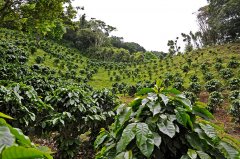
San Marco is the hottest coffee farm among the eight coffee producing areas in Guatemala.
The growth environment of boutique coffee beans also has higher requirements. Generally grow at an altitude of 1500 meters or even more than 2000 meters above sea level, with appropriate precipitation, sunshine, temperature and soil conditions. Some world-famous coffee beans also have a special geographical environment, such as the alpine clouds in the Blue Mountains, the free shade provided by the afternoon clouds in Kona, and the volcanic ash soil in Antigua.

Description of Coffee Flavor in Santa Rita Manor, Colombia, introduction to the characteristics of Grinding degree and planting Environment
The pure taste of Colombian coffee, in addition to the natural environment with the most favorable conditions for coffee growth, is inseparable from the hard work of local growers. In Colombia, coffee cultivation has reached 1.07 million hectares, there are about 302000 coffee plantations in the country, and 30 to 40 per cent of the rural population depends directly on coffee production. There are many farms in Colombia, but

Good average quality; aromatic and full-bodied Ethiopian coffee plantation taste characteristics
Ethiopian coffee beans grow in a near-natural environment. After years of cultivation under the same growing conditions, Ethiopian coffee beans have gradually adapted to the environment here. More than 60% of coffee beans are forest or semi-forest grown coffee. Coffee farming villages produce about 35 percent of the country's coffee.

Flavor and taste characteristics of coffee beans from Bishop Del Obispo Mountain Farm in Huilan, Colombia
Professional coffee knowledge exchange more coffee bean information please follow the coffee workshop (Wechat official account cafe_style) Columbia Huilan production area-Del Obispo Bishop Mountain Farm coffee beans flavor and taste characteristics? Colombia is currently the third largest coffee producer in the world, after Brazil and Vietnam. It first grew commercial beans in the 1830s and accounted for exports of coffee in the 20th century.

What is Harmony Farm in El Salvador? What are the varieties of coffee grown in El Salvador?
Professional coffee knowledge exchange more coffee bean information please follow the coffee workshop (Wechat official account cafe_style) among the countries of origin in Central America, El Salvador can be said to be the smallest country, although the output is much less than other countries, but the Pacific sea breeze and volcanic environment provide El Salvador coffee farmers with unique planting advantages and diversification.

Introduction to the characteristics of Hawaiian Coffee Flavor description and the planting Environment of varieties
Hawaii is the largest island in the Hawaiian archipelago, so it is also called the theBigIsland. Kona Coffee is produced in the west and south of the Kona region of Hawaii. Coffee trees are scattered on the slopes of Hualalai and MaunaLoa, which is 150m to 750m above sea level, which is suitable for coffee growth. The quality of Kona Coffee

What are the types and characteristics of organic coffee?
Professional coffee knowledge exchange more coffee bean information please pay attention to the coffee workshop (Wechat official account cafe_style) Organic coffee in the cultivation does not use any insecticides and other chemicals to treat pests or cultivation problems, but the use of natural methods, such as the use of natural composting, hedgerow, pruning and other methods to maintain the growth of coffee trees, in terms of pest control
Rainforest Alliance Certified Frog Dou ran Environmental Coffee "Rainforest Alliance Certified Coffee" quality
There is an obvious frog on the rainforest certification logo, rainforest alliance certified coffee, also known as frog beans. Rainforest Alliance RA (Rainforest Alliance) certification refers to a farm that meets the standards set by the Rainforest Alliance. The Alliance will protect the farm and its surrounding ecosystem, impose some restrictions on the use of pesticides, and evaluate benchmarks such as waste management.

Introduction to the planting environment of high-quality Ethiopian boutique coffee bean manor
March 1988, rebel activities of the Eritrean people's Liberation Front (EPLF) and Tigre people's Liberation Front (TPLF) launched an attack on government forces, a large-scale civil war broke out. In 1989, the Eritrean people's Liberation Front occupied most of Eritrea's province. On May 28, 1991, EGF troops, mainly from the people's Liberation Front of Tigre, entered Addis Ababa, Menges.

Why Rainforest Alliance Certified Coffee Matters What are the Benefits of Rainforest Alliance Certified Coffee
How much does coffee cost? When it comes to your bottom line and satisfying your daily coffee drinking habits, there are a few other things we need to consider besides the cost of coffee. Specifically, the impact of coffee beans on the environment, the conditions of workers, how coffee is transferred from the field to the cup, etc. Front Street Coffee believes that whether it is made at home or paid for by a barista, it should be considered